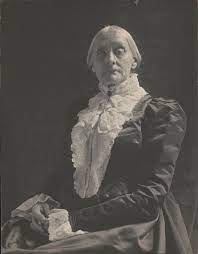
In the annals of American history, few stories are as compelling and significant as that of Susan B. Anthony, a pioneering suffragist who risked everything for the right to vote. This article delves into the events surrounding Anthony’s arrest for illegally casting a ballot in the 1872 presidential election, a pivotal moment in the fight for women’s suffrage in the United States.
The Road to 1872: Anthony’s Early Activism
A Lifetime of Advocacy
Susan B. Anthony was born in 1820 into a Quaker family in Massachusetts. From an early age, she was exposed to progressive ideas about equality and social reform. As she grew older, Anthony became increasingly involved in various social movements, including temperance and abolition.
Turning to Women’s Rights
In the 1850s, Anthony’s focus shifted predominantly to women’s rights. She recognized that without the right to vote, women would always be second-class citizens, unable to effect meaningful change in society. This realization set her on a path that would define the rest of her life.
The 1872 Election: A Bold Plan
The 14th Amendment Argument
Anthony and her fellow suffragists believed that the 14th Amendment, ratified in 1868, provided a legal basis for women’s right to vote. The amendment stated that “all persons born or naturalized in the United States” were citizens, and that no state could abridge the “privileges or immunities” of citizens.
Registering to Vote
Armed with this interpretation, Anthony and several other women in Rochester, New York, set out to register to vote in the 1872 presidential election. To their surprise and delight, they succeeded in registering, thanks in part to the support of sympathetic election inspectors.
Election Day: November 5, 1872
Casting the Ballot
On Election Day, Anthony and 14 other women from her ward successfully cast their ballots. They voted for Ulysses S. Grant, the Republican candidate, believing that the Republican Party was more likely to support women’s suffrage.
Immediate Aftermath
The women’s actions caused an immediate stir in Rochester and beyond. While some celebrated their bravery, others were outraged at what they saw as a flagrant violation of the law.
The Arrest and Trial
Anthony’s Arrest
On November 18, 1872, a U.S. Deputy Marshal arrived at Anthony’s home with a warrant for her arrest. She was charged with “knowingly voting without having a lawful right to vote,” a federal offense.
Pre-Trial Advocacy
Ever the activist, Anthony used the time before her trial to generate publicity for the cause. She gave speeches throughout Monroe County, New York, arguing that she had a constitutional right to vote.
The Trial Begins
Anthony’s trial began on June 17, 1873, in Canandaigua, New York. The case attracted national attention, with newspapers across the country reporting on the proceedings.
A Biased Judge
From the outset, it was clear that Anthony faced an uphill battle. The presiding judge, Ward Hunt, was openly hostile to her cause. He refused to allow Anthony to testify on her own behalf, claiming that as a woman, she was not competent to do so.
The Directed Verdict
In a shocking move, Judge Hunt instructed the jury to find Anthony guilty without deliberation. This directed verdict was highly unusual and widely criticized, even by those who opposed women’s suffrage.
The Sentence and Anthony’s Response
Anthony was fined $100 plus court costs. In a powerful speech before the court, she declared, “I shall never pay a dollar of your unjust penalty.” True to her word, she never paid the fine, and the government never attempted to collect it.
The Aftermath and Legacy
Immediate Impact
Anthony’s trial generated significant publicity for the women’s suffrage movement. While it did not result in an immediate change in voting laws, it sparked debates across the nation about women’s rights and the meaning of citizenship.
Long-Term Influence
The case of United States v. Susan B. Anthony became a rallying point for suffragists in the decades that followed. Anthony herself continued to campaign tirelessly for women’s rights until her death in 1906.
The 19th Amendment
Although Anthony did not live to see it, her efforts played a crucial role in the eventual passage of the 19th Amendment in 1920, which guaranteed women the right to vote nationwide.
Conclusion: A Legacy of Courage
Susan B. Anthony’s arrest for voting illegally in 1872 stands as a testament to her unwavering commitment to equality. By challenging unjust laws and societal norms, she helped pave the way for future generations of women to exercise their fundamental right to participate in democracy.
Today, as we continue to grapple with issues of voting rights and equal representation, Anthony’s courage and determination serve as an inspiration. Her famous words, “Failure is impossible,” continue to resonate with those who strive for justice and equality in all aspects of society.
As we reflect on Anthony’s legacy, we are reminded that progress often requires bold action and personal sacrifice. The right to vote, which many now take for granted, was hard-won through the efforts of courageous individuals like Susan B. Anthony, who dared to challenge the status quo and demand a voice in shaping their nation’s future.